
The Truth around Cramping
Muscle Cramps: What Current Scientific Evidence Really Shows
For many years, muscle cramps have been attributed to dehydration or electrolyte deficiencies such as sodium or calcium. However, current scientific evidence clearly shows that muscle cramps are not caused by dehydration or electrolyte loss.
Consuming salt tablets or electrolyte drinks does not prevent or resolve muscle cramps. In cases where individuals believe electrolytes have helped in the past, this effect is explained by the placebo effect. While placebo responses can be beneficial, they do not address the true underlying cause of cramping.
The Origin of the Electrolyte Myth
The link between muscle cramps and electrolyte loss dates back to the early 20th century, when workers on the Hoover Dam experienced cramping alongside reduced blood chloride levels. Further investigation revealed that these workers were suffering from gastrointestinal issues such as vomiting and diarrhea, which caused chloride loss unrelated to sweating or physical exertion.
Additionally, if muscle cramps were caused by a systemic loss of sodium or calcium, cramping would occur in multiple muscle groups simultaneously, not just in the muscles actively being used.
The Real Cause: Neuromuscular Fatigue
Muscle cramps occur due to altered neuromuscular control, specifically:
-
Increased excitatory signals that cause excessive muscle contraction.
-
Reduced inhibitory signals responsible for muscle relaxation.
This imbalance develops as a result of muscle fatigue.
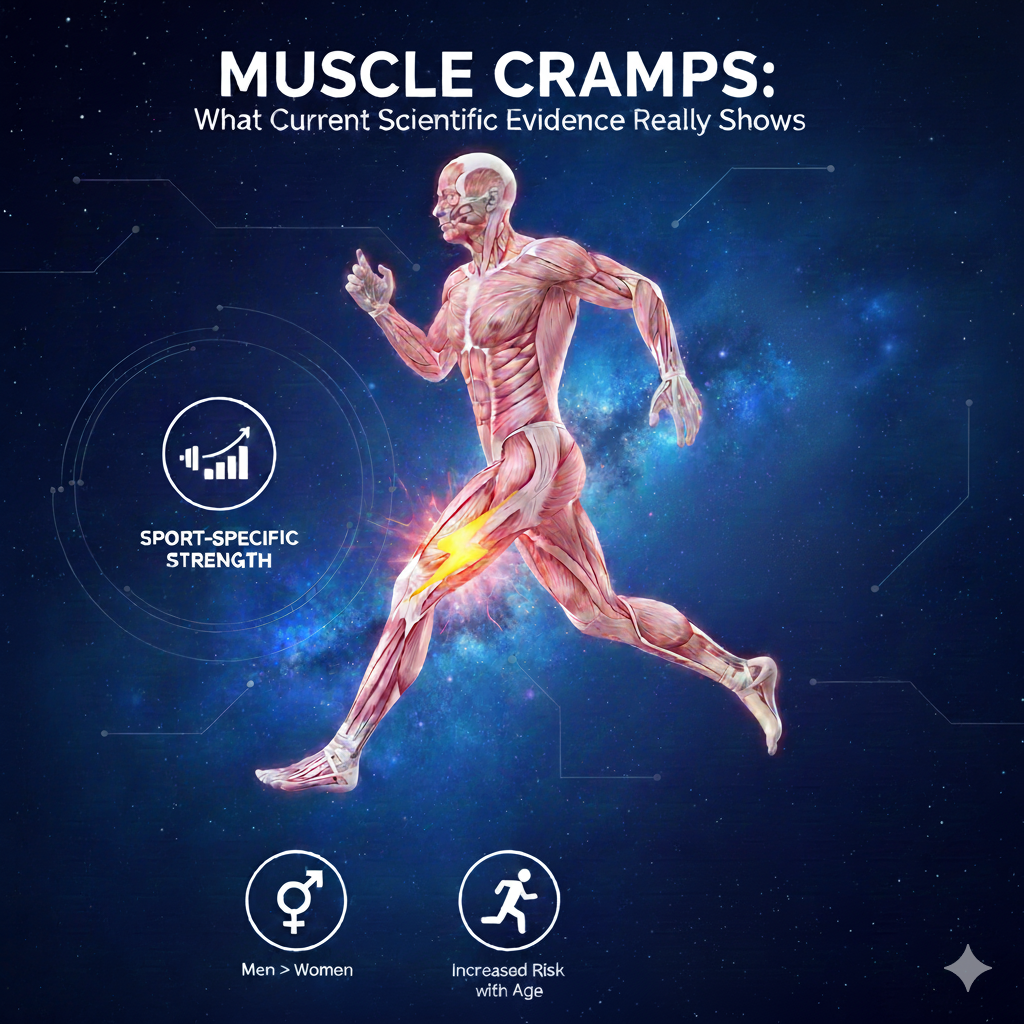
From a practical perspective, recurrent cramping in a specific muscle indicates that the muscle lacks the strength and endurance required to meet the demands of the activity being performed. For example, if an athlete experiences calf cramps while trail running but not while cycling, this suggests that the calf muscle is insufficiently conditioned for the specific load of trail running.
Similarly, cramps that occur at a consistent speed, intensity, distance, or duration indicate that the muscle is not adequately prepared for that level of demand.
Why Heat Increases Cramp Risk
An increased incidence of cramps in hot conditions is not due to greater fluid or electrolyte loss, but rather to the higher physiological stress placed on the body. Heat increases overall workload, accelerating muscle fatigue—particularly in athletes who are not acclimatized to training in hot environments.
Individual Differences
There is a genetic component to muscle cramping. Some individuals have a higher neuromuscular threshold for cramp onset, making them less prone to cramping even with limited training.
In addition:
-
Men experience muscle cramps more frequently than women.
-
The likelihood of cramping increases with age.
The Effective Solution
When a specific muscle consistently cramps during predictable moments—such as the final kilometers of a race or during the run leg of a triathlon—the solution is not electrolyte supplementation, but targeted physical preparation.
Effective interventions include:
-
Sport-specific strength training
-
Muscular endurance development
-
Plyometrics and fast, explosive movements
-
Training at the intensities and durations where cramps typically occur
The goal is to elevate the functional capacity of the muscle so it can tolerate the real demands of the sport or activity.