
The Skelligs and Foot Health
The Skelligs and Foot Health
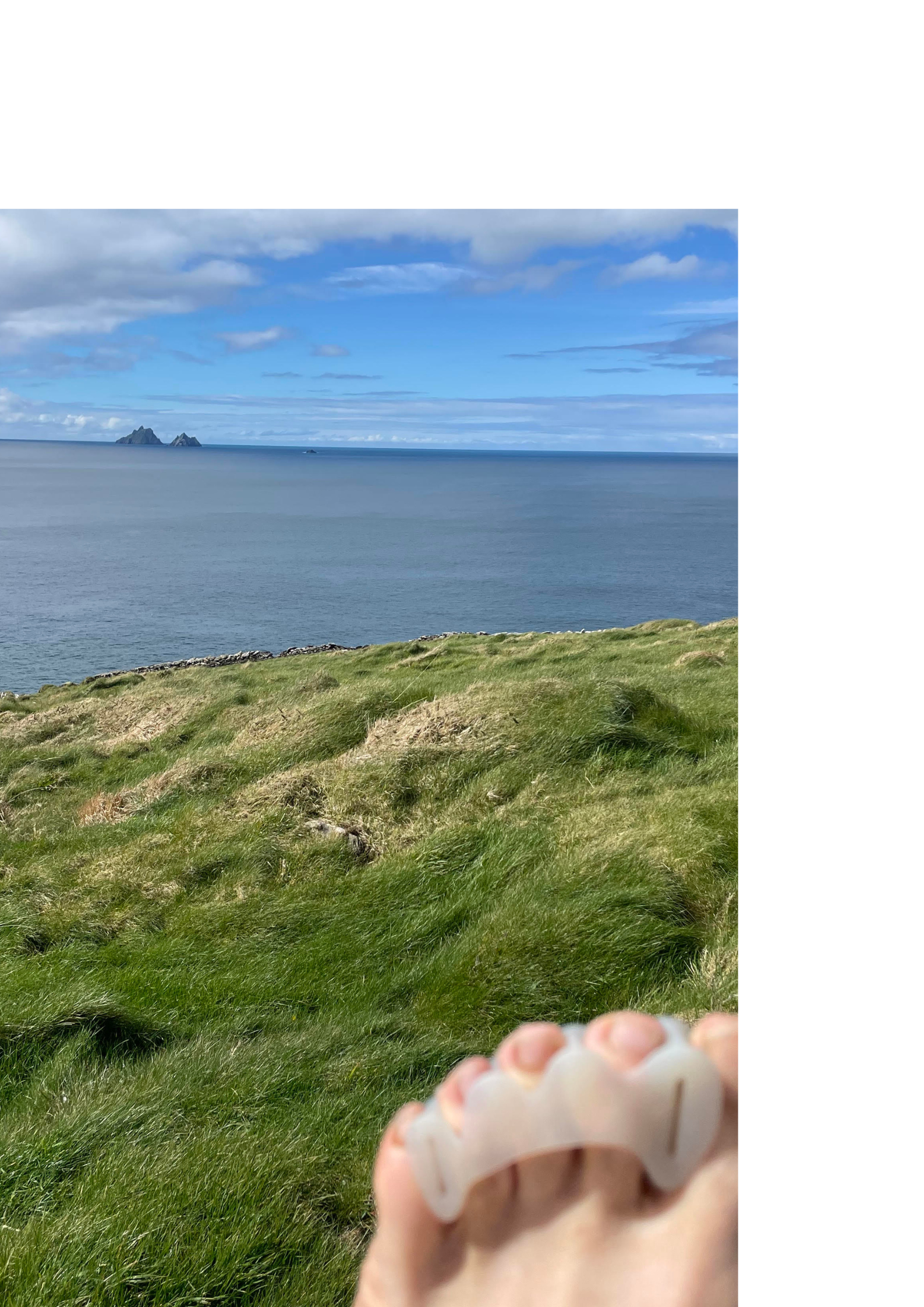
That’s the Skelligs out there in the distance, and lucky for you all that you can’t see my left foot in the forefront of the photo! It is there, you’ll just have to trust me! Ash and I went for a beautiful walk around Bolus Head, and I took the opportunity to capture some footage afterwards.
This brings me to a key point: toe spacers are here to stay. They are not a fad, and here’s why.
Why Toe Spacers Matter
Approximately 40% of the foot’s longitudinal stiffness comes from our ability to splay the forefoot and put tension on the deep transverse inter-metatarsal ligament.
In simple terms:
- Spreading your toes and forefoot creates stability, helping you push forward efficiently when walking or running.
- Toe splay activates foot muscles through the tie-bar mechanism: when the forefoot spreads, the foot muscles engage.
- Better alignment of toes improves balance and overall foot stability. When toes line up with the metatarsal bones, the foot functions optimally.
Walking and Moving in Alignment
This is where toe spacers come in, especially those designed to allow walking and movement. Using them regularly strengthens and activates the feet while keeping toes in a more aligned position.
I can personally vouch for this. I’ve been wearing barefoot (wide) shoes for at least five years and will never go back to standard shoes for daily wear—they’re simply more comfortable and natural.
I bought “Correct Toes” spacers three years ago, but only in the past year have I worn them daily. They’re now practically unnoticeable unless I try to wear a standard shoe. I’m also managing a minor bunion on my right foot. While toe spacers won’t cure it, they help maintain alignment and improve the big toe joint’s movement.
Considering Minimalist Shoes?
Are any of you thinking about trying minimal or barefoot shoes? If so, I’m happy to answer any questions you might have. Toe spacers and wide, natural shoes can make a big difference for foot function, stability, and comfort.